Teaching user-centered design
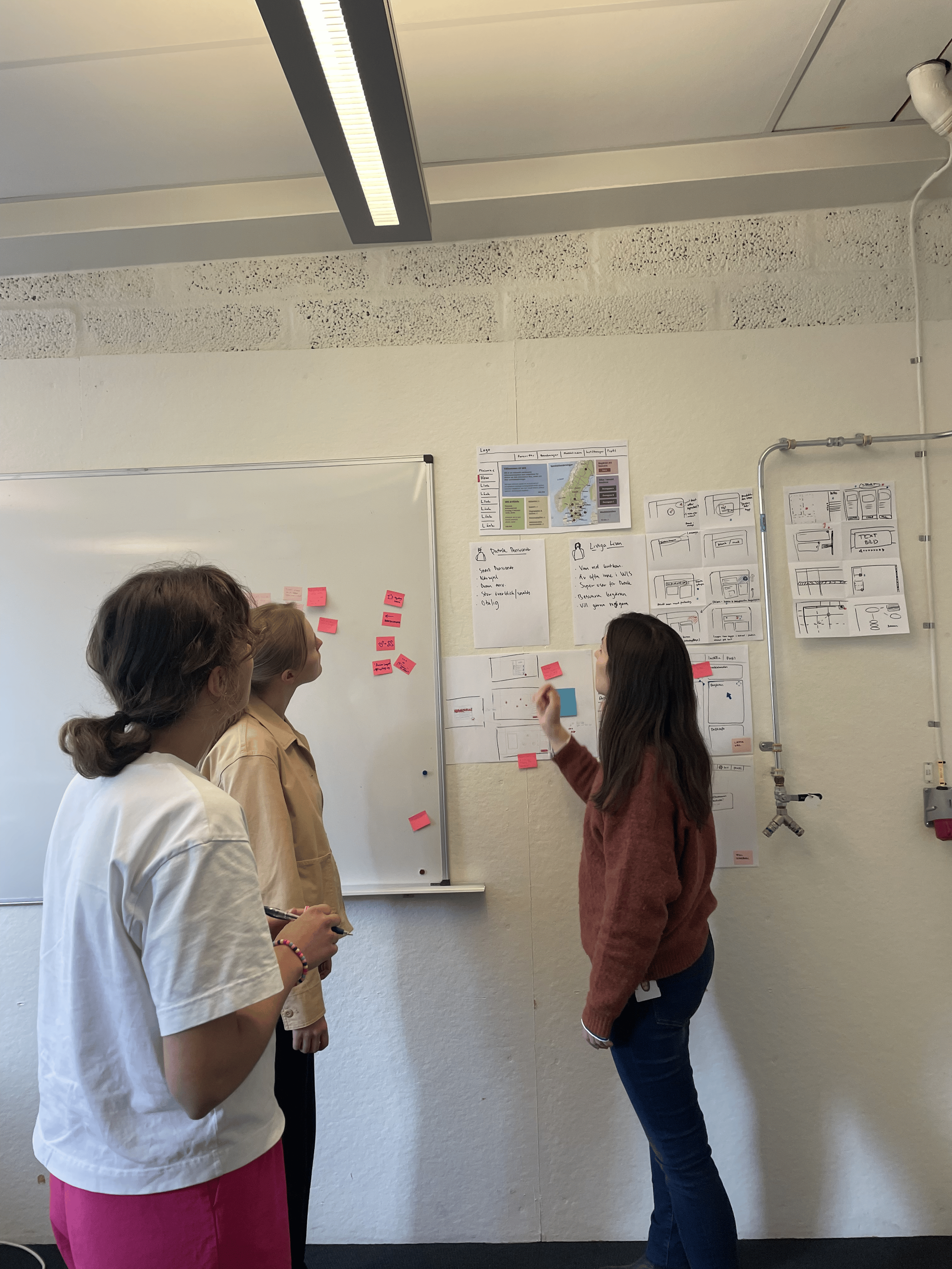
During the fall term, I taught a course in User‑Centered Design at IT‑Högskolan for UX students at the beginning of their education. The course aimed to provide a foundational understanding of user‑centered design processes, methods, and ways of working, as well as a general introduction to the UX design discipline.
The course spanned several weeks and was divided into progressive modules that built on each other, guiding students through the full design process—from understanding users and needs to concept development and evaluation.
Client
IT-högskolan
Year
August 2025 - January 2026
Team
40 students
Role
UX Design Educator
Role & responsibilities
I was responsible for planning and delivering the course, including creating the course structure, learning objectives, lecture content, and practical exercises. The focus was on introducing the end‑to‑end design process and helping students understand how theory translates into practice.
Teaching was strongly practice‑oriented and combined lectures, method walkthroughs, group discussions, workshops, and continuous supervision. Throughout the course, I adapted the content and pace to the students’ prior knowledge and learning needs to ensure an inclusive and supportive learning environment.
Teaching approach
Students worked continuously on a cohesive design case, allowing them to apply methods and tools in a realistic, project‑based context. This approach helped students gain hands‑on experience with user‑centered design and develop an understanding of how UX work functions in real projects and cross‑functional teams.
Through exercises, feedback sessions, and reflection, students built confidence in applying research methods, synthesizing insights, and iterating on design solutions. My role included ongoing guidance, constructive feedback, and evaluation of assignments and presentations.

Activities performed
I planned and delivered the course, including defining learning objectives and preparing lecture material and practical exercises. I taught UX fundamentals through lectures and workshops, supervised students throughout a cohesive design case, and provided continuous feedback and guidance. I also evaluated assignments and presentations and adapted the teaching approach to different student backgrounds and learning needs.
Course content
The course introduced core UX concepts and user‑centered design processes, with a focus on understanding users through research methods such as interviews and observation. Students practiced synthesizing insights using stakeholder mapping, personas, and customer journeys, and explored iterative design through ideation, sketching, and concept development. Prototyping in Figma, usability testing, feedback, and presentation techniques helped students apply and communicate their design solutions effectively.
outcome & value
Through this course, students gained a practical and conceptual foundation in user‑centered design, learned how to work iteratively, and developed an understanding of how UX methods are applied in real‑world projects.
For me, this experience strengthened my skills in communication, facilitation, mentoring, and translating complex design concepts into accessible learning, as well as deepened my understanding of UX fundamentals by teaching them to others.